Why Businesses Choose Staff Augmentation for Software Projects in 2026

In 2026, the way businesses build software has fundamentally evolved. The demand for speed, scalability, and specialized expertise has never been higher, especially in the United States. Companies are no longer asking whether they should adapt their development models—they are asking how fast they can do it. Against this backdrop, staff augmentation has emerged as one of the most reliable and strategic solutions for software projects, particularly for mobile app development and enterprise-grade digital products.
From startups in New York racing to launch MVPs to large enterprises modernizing legacy systems, organizations are rethinking traditional hiring models. Instead of committing to long-term, rigid structures, they are choosing to hire developers through flexible, on-demand engagement models that allow them to stay competitive in a rapidly changing market.
This shift is not a trend—it is a structural change in how software is built in 2026.
The New Reality of Software Development in 2026
Software projects today are more complex, more integrated, and more business-critical than ever before. A single application may involve cloud infrastructure, AI-driven features, cybersecurity compliance, data engineering, and seamless user experiences across devices. For US businesses, especially those focused on mobile app development, the pressure to deliver flawless products quickly is intense.
At the same time, the talent market remains highly competitive. Hiring full-time developers locally in cities like New York, San Francisco, or Austin is expensive and time-consuming. Salaries are high, onboarding takes months, and the risk of attrition is real. This is where staff augmentation becomes a strategic advantage rather than a temporary fix.
Staff augmentation allows companies to extend their in-house teams with skilled professionals who are ready to contribute from day one. Instead of rebuilding teams from scratch, businesses can scale up or down based on project requirements, timelines, and budgets.
Why Traditional Hiring Is No Longer Enough
In 2026, traditional hiring models struggle to keep pace with modern software demands. Recruiting full-time employees involves long hiring cycles, high overhead costs, and long-term commitments that may not align with short-term project needs. For fast-moving industries like fintech, healthtech, e-commerce, and SaaS, this rigidity can slow innovation.
Businesses focused on mobile app development often face fluctuating workloads. One quarter may require iOS specialists and UI/UX experts, while the next demands backend scalability or cloud optimization. Hiring full-time for every skill set is inefficient and costly.
By choosing staff augmentation, companies gain the ability to hire developers with precise expertise exactly when they need them. This model supports agility, reduces risk, and ensures that teams remain lean without compromising on quality.
Access to Specialized Talent on Demand
One of the strongest reasons businesses choose staff augmentation in 2026 is access to highly specialized talent. Technologies evolve quickly, and staying updated internally is challenging. Whether it’s React Native for mobile app development, AI integrations, blockchain solutions, or cloud-native architectures, businesses need experts—not generalists.
Through staff augmentation, organizations can instantly onboard developers with niche skills and proven experience. This is particularly valuable for US companies working on complex or high-stakes projects where mistakes are costly. Instead of spending months training internal teams, companies can plug in experts who have already solved similar problems.
For companies in New York and other innovation hubs, this access to global talent helps balance local market costs while maintaining world-class development standards.
Faster Time-to-Market for Competitive Advantage
Speed is a defining factor in 2026. Markets move quickly, user expectations change rapidly, and competitors are always one step away. Delayed launches often translate into lost revenue and missed opportunities.
Staff augmentation significantly reduces development timelines. Since augmented developers are experienced and immediately productive, projects move faster without compromising quality. Businesses can parallelize workstreams, accelerate releases, and respond to market feedback in real time.
This advantage is especially critical in mobile app development, where frequent updates, feature rollouts, and performance improvements are essential for user retention. Companies that can scale their teams quickly have a clear edge over those stuck in slow hiring cycles.
Cost Efficiency Without Compromising Quality
Contrary to outdated assumptions, staff augmentation in 2026 is not about cutting corners—it’s about optimizing costs intelligently. Hiring full-time developers in the US, particularly in cities like New York, involves salaries, benefits, infrastructure, and long-term liabilities.
With staff augmentation, businesses pay only for what they need. There are no recruitment costs, no long-term payroll commitments, and no idle resources once a project phase ends. This model allows companies to allocate budgets more efficiently while still working with top-tier talent.
For startups and mid-sized companies, this cost efficiency can be the difference between scaling successfully and burning through capital too quickly.
Seamless Integration With In-House Teams
Modern staff augmentation is not outsourcing in disguise. In 2026, augmented developers work as an extension of internal teams. They follow the same workflows, attend stand-ups, collaborate in real time, and align with company culture and goals.
This integration ensures transparency, accountability, and consistent quality. Businesses retain full control over project direction, architecture decisions, and timelines while benefiting from additional expertise.
For US-based companies prioritizing data security, compliance, and IP protection, this level of control is crucial. Staff augmentation offers flexibility without sacrificing ownership or oversight.
Scalability for Long-Term Growth
Software needs are rarely static. A product may start with a small team, scale rapidly during growth, and stabilize later. Staff augmentation supports this natural lifecycle.
Businesses can scale teams up during peak development phases and scale down once milestones are achieved. This flexibility is invaluable in 2026, where economic conditions, funding cycles, and market demands can change quickly.
For companies involved in mobile app development, this scalability allows them to respond to user growth, platform updates, and new feature requirements without restructuring their entire workforce.
Focus on Core Business Objectives
Another major reason businesses choose staff augmentation is focus. Managing recruitment, training, and retention can distract leadership from strategic goals. By choosing to hire developers through staff augmentation partners, companies free up internal resources to focus on innovation, customer experience, and business growth.
Technical execution remains strong, while decision-makers stay aligned with long-term vision rather than operational bottlenecks.
Why US Businesses Trust Staff Augmentation in 2026
Across the US, from startups in New York to enterprises nationwide, staff augmentation has proven its value. It aligns perfectly with modern business priorities: agility, efficiency, speed, and access to global expertise.
In 2026, businesses are not choosing staff augmentation because it is convenient—they are choosing it because it is strategic. It enables innovation without unnecessary risk, growth without excessive cost, and flexibility without loss of control.
The SMT Labs Perspective
At SMT Labs, we see staff augmentation as a partnership, not a transaction. For US businesses seeking reliable mobile app development, scalable engineering teams, and the ability to hire developers quickly without compromise, staff augmentation is the future.
As software continues to shape how businesses operate and compete, the ability to adapt development models will define success. Staff augmentation is no longer an alternative—it is a core strategy for winning in 2026 and beyond.
Final Thoughts
The software landscape in 2026 demands smarter, faster, and more flexible approaches to building technology. Staff augmentation empowers businesses to meet these demands head-on. With access to top talent, faster delivery, cost efficiency, and seamless integration, it is clear why US companies—especially those in competitive markets like New York—are choosing staff augmentation for their software and mobile app development projects.
For businesses that want to stay ahead, the question is no longer if they should adopt staff augmentation, but how effectively they can leverage it to drive long-term success.
Recent Post

Popular Posts
-
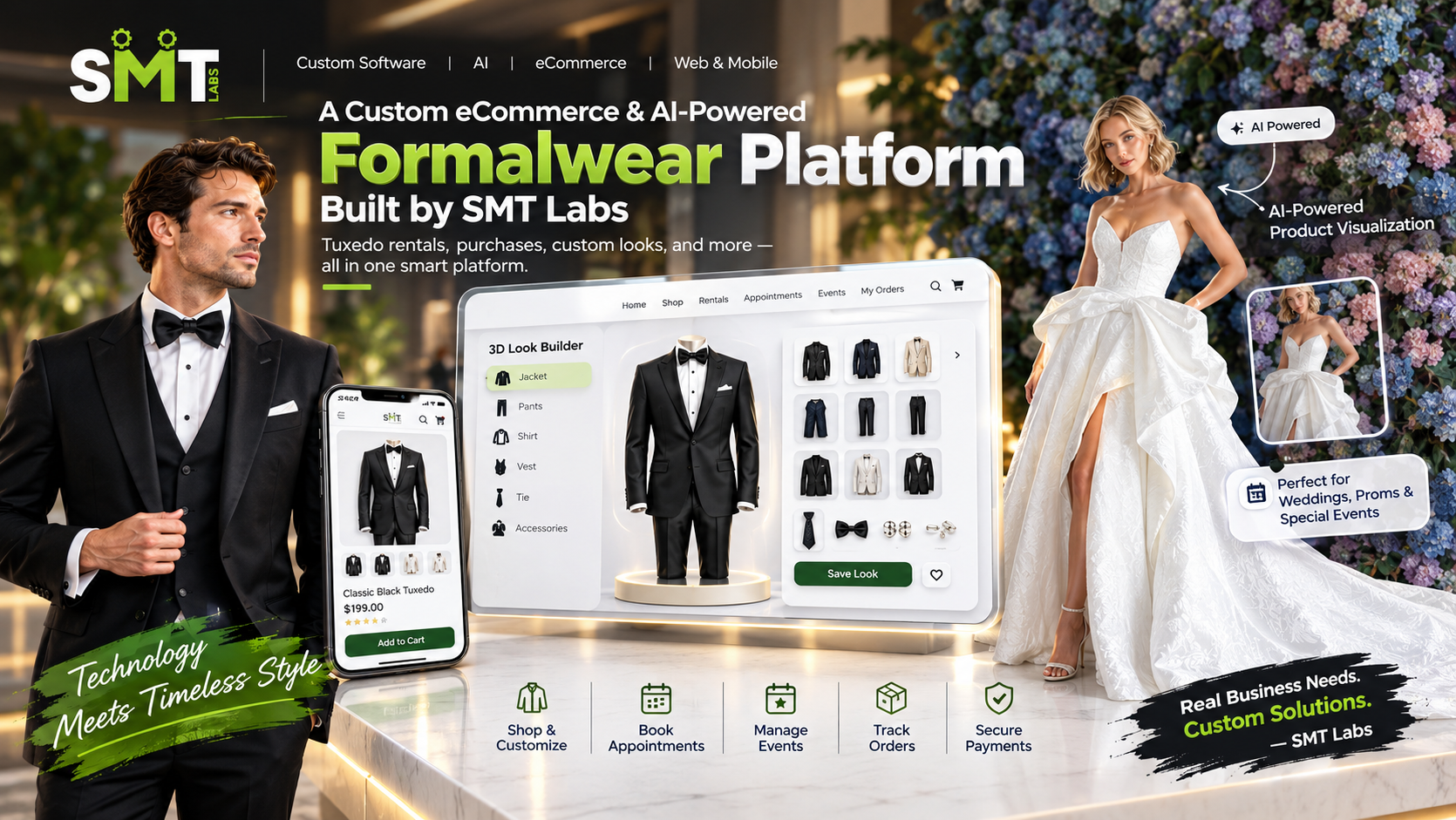
Building the Future of Formalwear Retail with AI & 3D eCommerce
SMT Labs in AI & INNOVATION Sep 22, 2026 -
Why Healthcare App Development Is Transforming Patient Care
SMT Labs in HEALTHCARE Feb 19, 2026 -
How Generative AI Services Improve Customer Experience
SMT Labs in GENERATIVE AI Feb 09, 2026 -
Custom Fintech Software Development: The New Revolution in the Financial Industry
SMT Labs in DEVELOPMENT Apr 24, 2025 -
Fintech Application Development Company: Leading Services in Fintech App Development
SMT Labs in DEVELOPMENT Feb 20, 2025
 INDIA
INDIA  USA
USA  SOUTH AFRICA
  MAURITIUS