PowerApps vs Custom Development: Which One Saves More Time and Budget?
Every business today runs on software. From internal workflow tools to customer-facing mobile apps, applications are no longer a “nice to have”—they are the backbone of operations. For US-based companies, especially those competing in fast-paced markets, the biggest question are no longer should we build an app? but how fast can we build it, and how much will it cost?
This is where the debate around PowerApps vs custom development really heats up. On one side, you have Microsoft PowerApps, a low-code platform promising rapid development, reduced costs, and faster deployment. On the other, you have traditional custom development, the route chosen by almost every leading mobile app development company in the US, offering full control, scalability, and long-term flexibility.
Businesses working with a mobile app development company Los Angeles, a mobile app development company in New York, or even a mobile app development company in Austin Texas often face the same dilemma: should they go with a low-code platform to save time and budget, or invest in custom development for a future-proof solution?
The answer isn’t black and white. It depends on timelines, budgets, scalability needs, security requirements, and long-term business goals. In this in-depth guide, we’ll break everything down in plain English—no jargon, no fluff—so you can make a confident, informed decision. Whether you’re exploring mobile app development Los Angeles, mobile app development Chicago, or working with mobile app developers in Dallas, this comparison will help you understand which approach truly saves time and money in the long run.
Understanding PowerApps at a Glance
What Is Microsoft PowerApps?
Microsoft PowerApps is a low-code application development platform designed to help businesses build apps quickly with minimal coding. Instead of writing thousands of lines of code, developers—and sometimes even non-developers—can use drag-and-drop components, prebuilt templates, and connectors to create functional applications.
For US companies looking for speed, PowerApps feels like a shortcut. Many organizations working with a mobile app development company Denver or a mobile app development company Seattle use PowerApps for internal tools such as approval workflows, inventory tracking, and simple dashboards. The promise is simple: build apps in days or weeks instead of months.
PowerApps integrates seamlessly with Microsoft’s ecosystem, including Office 365, SharePoint, Dynamics 365, and Azure. If your company already lives inside Microsoft tools, PowerApps can feel like a natural extension rather than a brand-new platform.
However, while PowerApps reduces development complexity, it also introduces limitations. You’re essentially building within Microsoft’s rules, design constraints, and performance boundaries. That trade-off is what makes the PowerApps vs custom development discussion so important.
Core Features That Make PowerApps Popular
PowerApps didn’t become popular by accident. It offers several features that appeal to businesses trying to move fast without burning their budgets:
- Low-code development environment that reduces dependency on hardcore developers
- Prebuilt templates and connectors for faster setup
- Native integration with Microsoft products, ideal for enterprises
- Rapid prototyping, allowing teams to test ideas quickly
- Cloud-based deployment, reducing infrastructure headaches
For companies exploring mobile app development in Seattle or mobile app development Austin, PowerApps often looks attractive during early-stage planning because it minimizes upfront investment and accelerates proof-of-concept development.
Typical Use Cases for PowerApps in US Businesses
PowerApps shines when the requirements are simple and internal-focused. Common use cases include:
- Internal HR tools
- Approval workflows
- Simple data entry apps
- Reporting dashboards
- Basic mobile apps for internal teams
Many mobile app developers in Austin and mobile app developers Denver recommend PowerApps when speed matters more than customization. But when businesses start thinking about customer-facing apps or complex workflows, the limitations become more visible.
Understanding Custom Application Development
What Does Custom Development Really Mean?
Custom development is exactly what it sounds like—applications built from scratch, tailored specifically to your business needs. Instead of relying on prebuilt components, developers design, code, test, and deploy software using frameworks, languages, and architectures that best suit the project.
When you work with a mobile app development company in Dallas, a chicago mobile app development company, or mobile app developers San Francisco, custom development usually means full ownership of your application. You decide how it looks, how it performs, how it scales, and how it integrates with other systems.
Yes, it takes longer. Yes, it costs more upfront. But it also gives you freedom—something low-code platforms can’t always offer.
Technologies Commonly Used in Custom App Development
Custom development opens the door to a wide range of technologies, including:
- Frontend frameworks like React, Angular, or Flutter
- Backend technologies such as Node.js, .NET, Java, or Python
- Cloud platforms like AWS, Azure, or Google Cloud
- Native mobile development for iOS and Android
A top mobile app development company in Dallas or a mobile app development company San Francisco often selects technologies based on scalability, security, and long-term maintainability rather than short-term speed.
When Businesses Choose Custom Development
Custom development is typically chosen when:
- The app is customer-facing
- Performance and scalability are critical
- The business model is unique
- Long-term ROI matters more than quick deployment
Companies investing in mobile app development in Atlanta, mobile app development San Francisco, or mobile app development company in Austin often view custom development as a strategic asset rather than just an expense.
Time-to-Market: PowerApps vs Custom Development
Development Speed with PowerApps
Speed is PowerApps’ strongest selling point. Apps that might take months in custom development can often be built in weeks—or even days—using PowerApps. For internal tools, this speed can be a game changer.
Businesses working with a mobile app development company Los Angeles often use PowerApps for rapid internal deployment while planning a larger custom solution in parallel. It’s like using a shortcut while building the main road.
Development Timelines in Custom App Projects
Custom development is slower by nature. Requirements gathering, UI/UX design, development, testing, and deployment all take time. A typical custom mobile app project can take anywhere from three to nine months—or longer for complex enterprise solutions.
However, this time investment often results in better performance, scalability, and user experience, especially for companies targeting large US markets like mobile app development New York, mobile app development Chicago, or mobile app development Los Angeles.
Realistic Time Comparisons for US Companies
If your goal is to launch something quickly, PowerApps wins. If your goal is to launch the right product that can evolve with your business, custom development often proves faster in the long run because it avoids rework, platform limitations, and migration challenges.
Budget Considerations: Which Option Is More Cost-Effective?
When businesses start comparing PowerApps vs custom development, budget is usually the first concern raised in boardrooms across the US. Whether you’re consulting a mobile app development company Los Angeles, a mobile app development company in Dallas, or mobile app developers in New York, the conversation almost always begins with cost. But here’s the truth: cost-effectiveness depends on how long and how far you plan to go with the application.
PowerApps looks cheaper on the surface. You avoid heavy development costs, reduce engineering hours, and rely on Microsoft’s infrastructure. Licensing fees are predictable, and you don’t need a large development team. For startups or internal departments, this feels like a financial win. Many organizations exploring mobile app development Denver or mobile app development Seattle choose PowerApps simply because it aligns with limited short-term budgets.
Custom development, on the other hand, requires a higher upfront investment. You’re paying for design, architecture, development, testing, and deployment. A top mobile app development company in Dallas or a chicago mobile app development company will often quote a higher initial cost—but that cost reflects ownership, flexibility, and long-term savings.
What many businesses don’t realize is that PowerApps costs don’t stop at licensing. As apps grow in usage, data volume, and complexity, licensing tiers increase. Add customization needs, performance tuning, or external integrations, and costs can quietly rise. Over time, businesses may find themselves spending almost as much as they would on a custom solution—without owning the code.
In contrast, custom development costs are front-loaded. Once the app is built, you control hosting, maintenance, and scaling decisions. For customer-facing apps developed by a mobile app development company San Francisco or mobile app developers Chicago, this control often translates into better ROI over three to five years.
So which saves more budget? Short-term: PowerApps. Long-term: custom development—especially for businesses planning growth.
Flexibility and Scalability Comparison
Flexibility is where the PowerApps vs custom development debate becomes crystal clear. PowerApps is flexible within its ecosystem. You can build forms, dashboards, and workflows efficiently—but only as long as you stay inside Microsoft’s boundaries. The moment your business needs something unconventional, flexibility starts to shrink.
Companies working with mobile app developers Austin or mobile app development company in Atlanta often realize this when their internal tools suddenly need customer access, advanced analytics, or unique user experiences. PowerApps wasn’t designed for limitless creativity—it was designed for efficiency.
Custom development, however, thrives on flexibility. Want a unique onboarding flow? No problem. Need to integrate with legacy systems, third-party APIs, or IoT devices? That’s standard practice for a mobile app development company in New York or mobile app developers San Francisco. Custom apps are built to adapt, not conform.
Scalability follows the same pattern. PowerApps works well for small to medium user bases. But as usage increases, performance tuning options are limited. Custom applications, especially those built by a mobile app development company Austin Texas or mobile app development company Seattle, are designed with scalability in mind from day one.
If your app is expected to grow alongside your business, custom development offers peace of mind that low-code platforms simply can’t guarantee.
User Experience and Design Capabilities
User experience is no longer optional. Whether it’s an internal tool or a customer-facing mobile app, people expect intuitive, fast, and visually appealing experiences. This is where PowerApps often struggles.
PowerApps provides predefined UI components that look consistent—but also generic. For internal tools, that’s acceptable. But for customer-facing apps, generic design can hurt engagement. A mobile app development company Los Angeles or mobile app development Chicago will often caution businesses against using PowerApps when branding and UX differentiation matter.
Custom development unlocks full design freedom. Designers and developers collaborate to create experiences that feel natural, engaging, and aligned with brand identity. This is especially critical for businesses investing in mobile app development San Francisco or mobile app development New York, where competition is fierce and user expectations are sky-high.
In short, PowerApps prioritizes speed over experience. Custom development prioritizes experience without sacrificing performance.
Integration with Existing Systems
Integration is often underestimated—until it becomes a roadblock. PowerApps integrates beautifully with Microsoft products. If your entire ecosystem lives in Office 365, SharePoint, and Dynamics, PowerApps feels effortless.
However, real-world businesses rarely rely on one ecosystem. CRM systems, ERP platforms, payment gateways, analytics tools—modern apps need to talk to everything. This is where custom development shines. A mobile app development company in Dallas or mobile app developers Denver can architect integrations that scale securely and efficiently.
PowerApps can integrate externally, but with limitations. Complex logic, real-time data syncing, and performance-heavy integrations can become challenging. Custom apps don’t face these constraints, making them ideal for enterprise-level operations.
Security and Compliance Factors
Security isn’t optional—especially in the US market. PowerApps benefits from Microsoft’s enterprise-grade security, which is a strong advantage. For internal apps handling standard business data, this is often sufficient.
But for industries like healthcare, finance, or eCommerce, security requirements go beyond defaults. Custom development allows full control over authentication, encryption, compliance standards, and data storage. A mobile app development company San Francisco or mobile app development company in New York can tailor security to exact regulatory needs.
If compliance and data sensitivity are critical, custom development offers more confidence and control.
Maintenance, Updates, and Long-Term Ownership
Ownership is where custom development truly wins. With PowerApps, you’re always dependent on Microsoft—its roadmap, updates, and pricing changes. If Microsoft changes a feature, you adapt.
Custom development gives you independence. Your app evolves on your terms. Maintenance costs are predictable, and updates align with business strategy. For companies working with mobile app developers in Dallas, mobile app developers Chicago, or mobile app developers Seattle, this autonomy is often worth the initial investment.
PowerApps vs Custom Development for Mobile Apps
PowerApps can create mobile-friendly apps—but it’s not a replacement for full-scale mobile app development. Customer-facing apps built using PowerApps often feel limited compared to native or cross-platform apps developed by a mobile app development company Los Angeles or mobile app development Austin.
Custom mobile apps deliver better performance, offline capabilities, device integrations, and user experiences. If mobile is core to your business, custom development is almost always the better choice.
Role of Professional Development Partners
Choosing between PowerApps and custom development isn’t a DIY decision. Experienced partners help businesses evaluate requirements honestly. Whether it’s a mobile app development company in Atlanta, mobile app development company Denver, or mobile app development company San Francisco, the right partner focuses on long-term value—not just quick wins.
Final Verdict: PowerApps or Custom Development?
PowerApps saves time and budget initially. Custom development saves time and budget strategically. The right choice depends on goals, growth plans, and user expectations.
Conclusion
PowerApps vs custom development isn’t about which is better—it’s about which is right for your business. For internal tools and rapid deployment, PowerApps makes sense. For scalable, secure, customer-facing solutions, custom development delivers lasting value. US businesses—from mobile app development Los Angeles to mobile app development New York—are increasingly choosing hybrid approaches, using PowerApps for speed and custom development for scale.
FAQ
Recent Post

Popular Posts
-
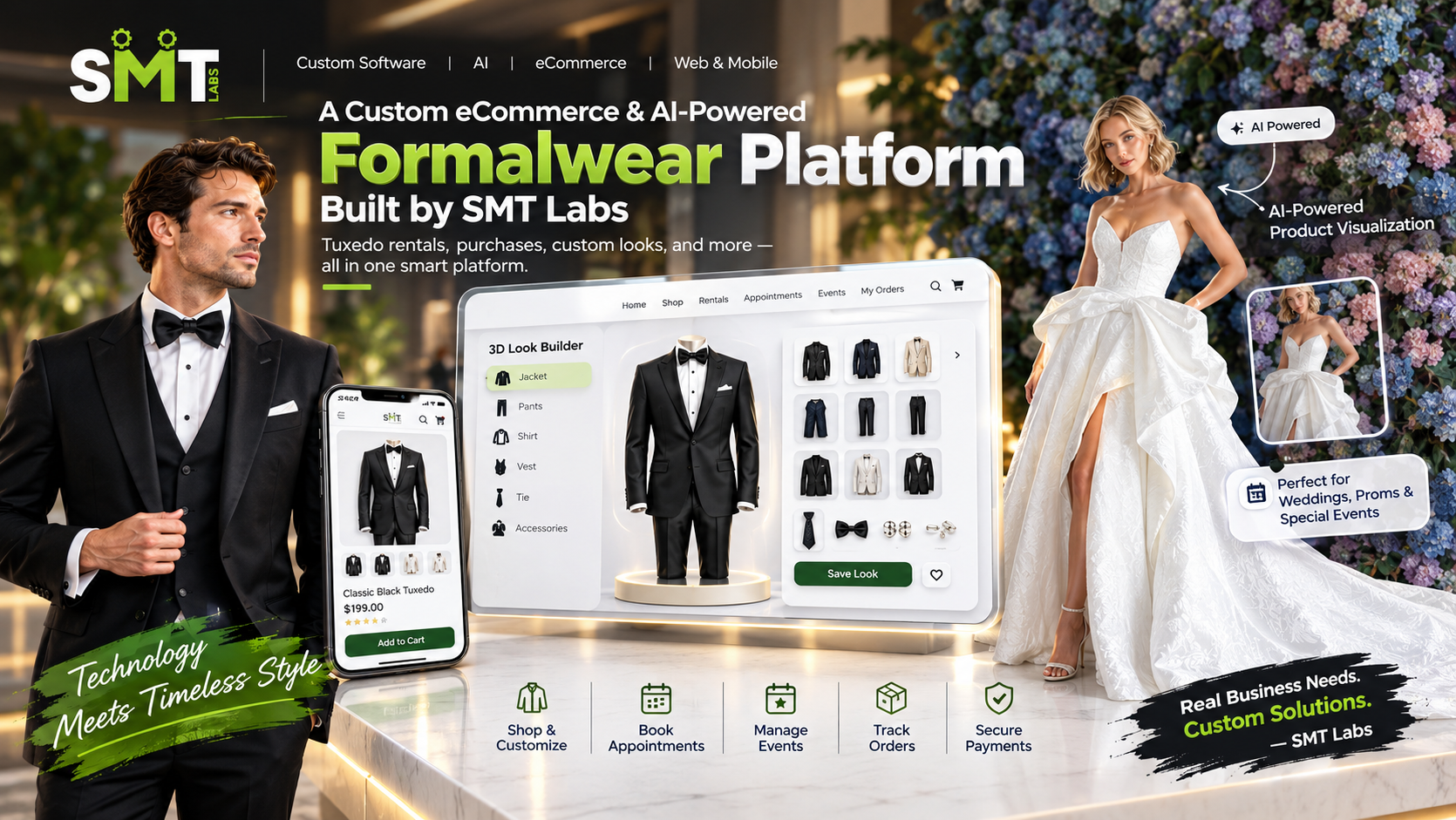
Building the Future of Formalwear Retail with AI & 3D eCommerce
SMT Labs in AI & INNOVATION Sep 22, 2026 -
Why Healthcare App Development Is Transforming Patient Care
SMT Labs in HEALTHCARE Feb 19, 2026 -
How Generative AI Services Improve Customer Experience
SMT Labs in GENERATIVE AI Feb 09, 2026 -
Custom Fintech Software Development: The New Revolution in the Financial Industry
SMT Labs in DEVELOPMENT Apr 24, 2025 -
Fintech Application Development Company: Leading Services in Fintech App Development
SMT Labs in DEVELOPMENT Feb 20, 2025
 INDIA
INDIA  USA
USA  SOUTH AFRICA
  MAURITIUS