How to Integrate GPT and LLMs Into Your Mobile App Workflows
Mobile apps are no longer just static tools that perform predefined tasks. Today, users expect apps to think, respond, personalize, and evolve in real time. This is where GPT and other Large Language Models (LLMs) are reshaping mobile app development across industries. From fintech chatbots in the Middle East to healthcare apps in the US, AI-powered workflows are becoming the new standard rather than a nice-to-have feature.
For businesses working with a mobile app development company in the USA, or startups partnering with a mobile app development agency in regions like Dubai, Saudi Arabia, or Qatar, integrating GPT into mobile workflows can unlock massive value. It improves user engagement, automates support, reduces operational costs, and enables intelligent decision-making inside the app itself.
In this blog, we’ll explore how GPT and LLMs can be practically integrated into mobile app workflows, the tools used, real-world use cases, and how mobile app developers can approach AI integration strategically—especially for fintech, healthcare, and enterprise applications.
Why GPT and LLMs Matter in Modern Mobile App Development
The mobile ecosystem is crowded. Millions of apps compete for attention, and users uninstall apps quickly if they don’t feel intuitive or helpful. This pressure has pushed custom mobile app development companies to go beyond basic UI/UX and embed intelligence directly into app workflows.
GPT and LLMs bring three major advantages to app development mobile projects:
First, they enable natural language interaction. Instead of tapping through endless screens, users can simply ask questions, give instructions, or describe problems. This is especially valuable in mobile banking app development, where users want quick answers about balances, transactions, or financial advice.
Second, LLMs allow real-time personalization. Whether it’s a healthcare app suggesting next steps to a patient or a fintech app tailoring investment insights, AI can adapt content and flow dynamically. This has become a key differentiator for top rated mobile app development companies working with enterprise clients.
Third, GPT-powered automation reduces manual workloads. Customer support, onboarding, form filling, content generation, and even compliance explanations can be partially or fully automated. For businesses concerned about mobile app development cost, this automation can significantly improve ROI.
In short, GPT is not replacing developers—it’s amplifying what mobile app developers can build.
Understanding GPT and LLM Integration at a Workflow Level
Before diving into tools or code, it’s important to understand what “integration” actually means. GPT does not live inside your mobile app in the traditional sense. Instead, it becomes part of the app’s workflow through APIs, cloud services, and backend logic designed by a custom mobile app development company.
A typical workflow looks like this:
The user interacts with the app → the app sends structured input to an LLM → the LLM processes the request → the response is returned and displayed or used to trigger actions.
For example, in ios mobile app development, a Swift-based app might collect user input and send it securely to a backend built in Node.js or Python. That backend calls tools like OpenAI GPT-4, Azure OpenAI, or Google Gemini. The response is then transformed into something useful—text, recommendations, summaries, or decisions—before being sent back to the app.
This separation is critical for security, scalability, and compliance, especially in enterprise mobile app development and regulated industries like fintech and healthcare.
Core Tools Used to Integrate GPT Into Mobile Apps
Most mobile app development companies rely on a stack of proven AI and cloud tools to integrate LLMs safely and efficiently.
OpenAI’s GPT-4 and GPT-4o are widely used for conversational interfaces, content generation, and reasoning-heavy tasks. Azure OpenAI is particularly popular with mobile app development services USA providers because it offers enterprise-grade security, SOC compliance, and better integration with Microsoft ecosystems.
For teams working on cross platform mobile app development services, frameworks like Flutter and React Native are paired with backend AI services. Many flutter mobile app development services now include AI modules as part of their standard offerings.
Other commonly used tools include:
- LangChain for chaining LLM prompts into complex workflows
- Pinecone or Weaviate for vector databases and semantic search
- Firebase or AWS Amplify for authentication and real-time data sync
- AWS Lambda or Google Cloud Functions for scalable AI execution
For fintech projects targeting the Middle East, tools like Stripe, Plaid, and regional banking APIs are combined with GPT to deliver localized, compliant experiences.
Integrating GPT Into User Experience and Interface Design
One of the biggest mistakes in AI-powered mobile app development is treating GPT as a chatbot bolted onto the app. The most successful apps integrate LLMs invisibly into the user journey.
Instead of adding a generic “Ask AI” button, smart mobile app developers embed AI into moments where users already need help. For example, during onboarding, GPT can explain features in simple language. During form entry, it can auto-complete fields or clarify confusing questions. In healthcare apps, it can translate medical jargon into plain English.
In iOS mobile app development company projects, this often means designing conversational micro-interactions rather than full chat screens. Apple users, in particular, value subtlety and performance, so GPT responses must be fast, relevant, and context-aware.
This approach not only improves engagement but also reduces cognitive load, making apps feel more human and intuitive.
Backend Architecture for GPT-Powered Mobile Apps
Behind every intelligent app is a carefully designed backend. A professional mobile app development agency will never expose GPT API keys directly in the app. Instead, they create a secure middleware layer.
This backend handles:
- Authentication and authorization
- Prompt engineering and input sanitization
- Rate limiting and cost control
- Logging and monitoring AI responses
For companies concerned about mobile app development cost, this architecture helps prevent runaway API usage. It also allows teams to switch LLM providers without rewriting the mobile app.
In custom mobile app development services, this backend is often reused across multiple apps or products, making AI integration scalable and future-proof.
Fintech App Development: GPT in the US and Middle East Markets
Fintech is one of the fastest adopters of GPT-driven workflows. In the US, mobile banking app development uses LLMs for transaction insights, fraud explanations, and personalized financial coaching.
In the Middle East, fintech apps face additional challenges like multilingual support, Sharia-compliant finance explanations, and region-specific regulations. GPT excels here by adapting language and tone dynamically.
A fintech mobile app development services provider might use GPT to:
- Explain complex financial products in Arabic or English
- Automate KYC and onboarding guidance
- Provide AI-powered customer support 24/7
For startups in Dubai or Riyadh partnering with a mobile app development company in the USA, this combination of regional expertise and advanced AI tooling is becoming a competitive advantage.
Healthcare Mobile App Development With LLMs
Healthcare apps demand accuracy, privacy, and trust. That’s why healthcare mobile app development services use GPT carefully, often in a “copilot” role rather than as a decision-maker.
GPT can help summarize patient data, explain diagnoses, or guide users through symptom checkers. However, it must always be paired with medical disclaimers and human oversight.
For a healthcare mobile app development compan, compliance with HIPAA in the US or regional healthcare regulations in the Middle East is non-negotiable. Tools like Azure OpenAI are often preferred because they allow data isolation and compliance controls.
When done right, GPT improves patient engagement without replacing medical professionals.
Cost, Scalability, and Performance Considerations
AI is powerful, but it’s not free. Mobile app development cost can increase quickly if GPT usage is not optimized. That’s why experienced mobile app development companies focus heavily on prompt efficiency and caching strategies.
Instead of calling GPT for every interaction, many apps reuse responses, summarize context, or limit AI usage to high-impact moments. This approach keeps costs predictable while maintaining performance.
Scalability is another key factor. As user bases grow, AI workloads must scale seamlessly. Cloud-native architectures and serverless backends are now standard in enterprise mobile app development projects.
Choosing the Right Mobile App Development Partner
Integrating GPT into your app is not just a technical decision—it’s a strategic one. Whether you’re looking to hire mobile app developers or partner with a custom mobile app development company, AI expertise should be a core capability.
Top agencies in cities like mobile app development Dallas, mobile app development company Chicago, and mobile app development company Austin are now positioning themselves as AI-first development partners.
For US-based businesses and Middle Eastern fintech startups alike, working with a top rated mobile app development company that understands GPT, compliance, and UX is critical to long-term success.
Conclusion
GPT and LLMs are transforming how mobile apps are designed, built, and experienced. From fintech and healthcare to enterprise platforms, AI-powered workflows are redefining what users expect from modern apps.
For businesses investing in custom mobile app development, the question is no longer whether to integrate GPT, but how to do it responsibly, securely, and strategically. With the right tools, architecture, and development partner, GPT can turn your mobile app into an intelligent assistant that grows with your users.
As mobile app development services USA and Middle Eastern markets continue to evolve, AI-driven mobile experiences will set the leaders apart from the rest.
FAQ
Recent Post

Popular Posts
-
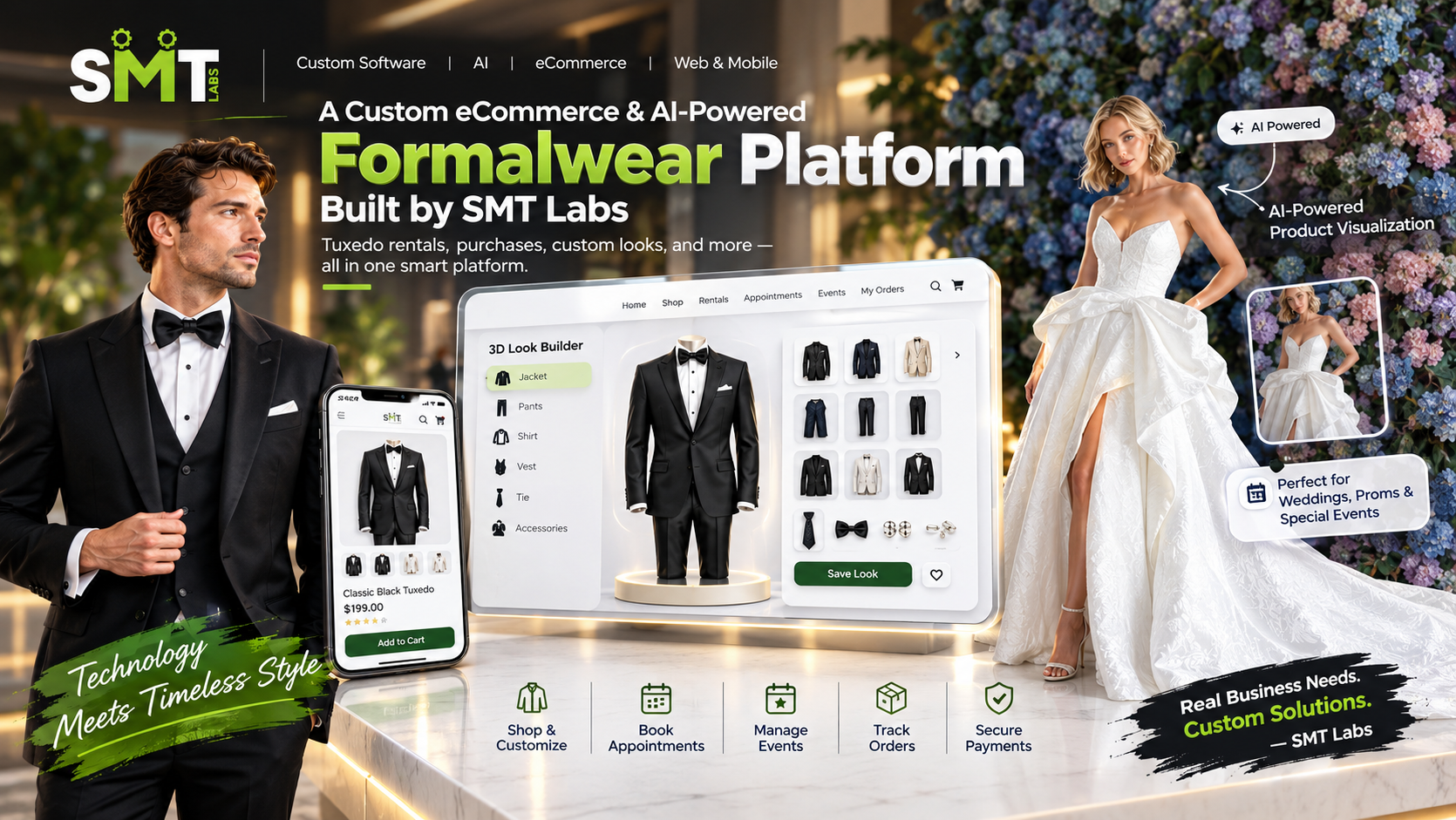
Building the Future of Formalwear Retail with AI & 3D eCommerce
SMT Labs in AI & INNOVATION Sep 22, 2026 -
Why Healthcare App Development Is Transforming Patient Care
SMT Labs in HEALTHCARE Feb 19, 2026 -
How Generative AI Services Improve Customer Experience
SMT Labs in GENERATIVE AI Feb 09, 2026 -
Custom Fintech Software Development: The New Revolution in the Financial Industry
SMT Labs in DEVELOPMENT Apr 24, 2025 -
Fintech Application Development Company: Leading Services in Fintech App Development
SMT Labs in DEVELOPMENT Feb 20, 2025
 INDIA
INDIA  USA
USA  SOUTH AFRICA
  MAURITIUS