What Businesses Should Expect from Professional Fintech Software Companies
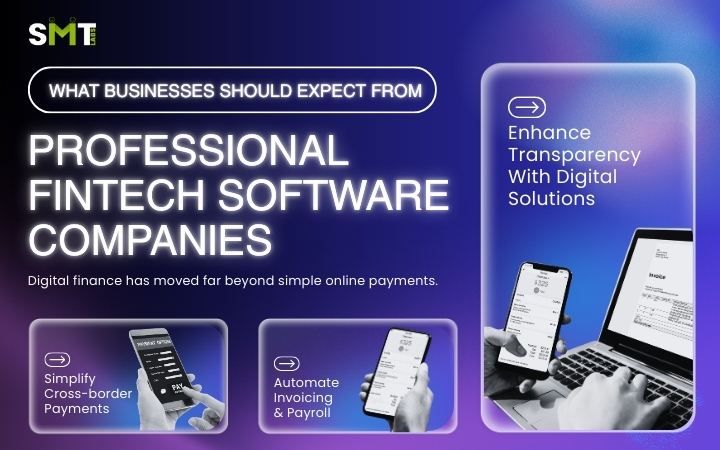
Digital finance has moved far beyond simple online payments. Today, businesses rely on technology to manage transactions, automate compliance, protect sensitive data, and deliver seamless financial experiences to users. At the center of this transformation are fintech software companies — the partners responsible for turning complex financial ideas into reliable digital products.
However, not all fintech software companies operate at the same level. While some focus purely on coding, professional fintech software companies take a broader, more strategic approach. For businesses investing in fintech solutions, knowing what to expect from a professional partner can make the difference between long-term success and costly setbacks.
This blog explains what businesses should realistically expect when working with professional fintech software companies and why those expectations matter.
Understanding Business Goals and Financial Requirements
A professional fintech software company does not start with technology — it starts with understanding the business.
Before writing a single line of code, experienced fintech teams invest time in learning how the business operates, who the target users are, and what problem the software is meant to solve. Financial products are rarely one-size-fits-all. A payment platform, lending system, or digital wallet must align with specific operational goals, risk tolerance, and growth plans.
Professional fintech software companies also understand that financial solutions operate within strict regulatory boundaries. They factor in compliance requirements early, helping businesses avoid rework and legal challenges later. This level of understanding ensures that the final product is not just functional but strategically aligned with business objectives.
Strong Emphasis on Security and Compliance
Security is non-negotiable in fintech. Businesses should expect professional fintech software companies to treat security as a foundation, not an add-on.
This includes secure data storage, encrypted transactions, role-based access controls, and proactive threat monitoring. Beyond technical safeguards, experienced fintech companies are well-versed in financial compliance standards and regulations that impact software design.
Rather than reacting to compliance issues after development, professional teams embed security and compliance practices into every stage of the development lifecycle. This reduces risk, builds user trust, and protects the business from costly security incidents.
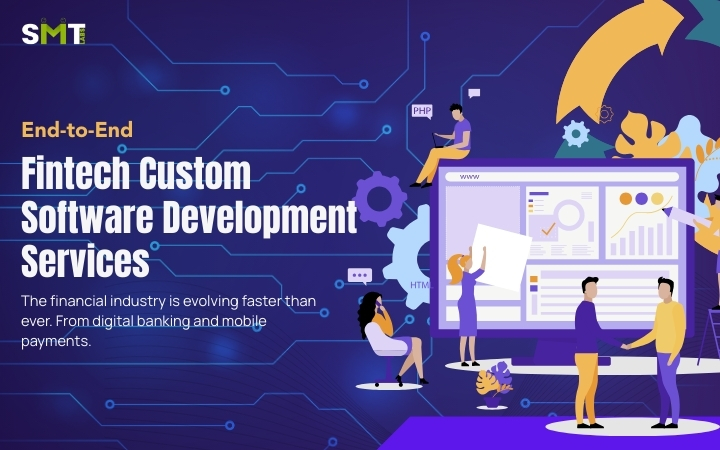
End-to-End Fintech Software Development Services
One of the key expectations businesses should have is comprehensive service delivery.
Professional fintech software companies typically offer end-to-end services, covering everything from initial consulting to post-launch support. This often includes product discovery, technical architecture planning, UI/UX design, development, testing, deployment, and ongoing maintenance.
By handling the entire process, professional fintech teams ensure consistency across all stages of development. Businesses benefit from a smoother workflow, fewer communication gaps, and a product that feels cohesive rather than pieced together.
Scalable and Future-Ready Architecture
Fintech products are rarely static. As businesses grow, transaction volumes increase, user bases expand, and new features become necessary. Professional fintech software companies design systems with scalability in mind.
Instead of building rigid systems that struggle under pressure, experienced teams create modular architectures that can adapt over time. Cloud-based infrastructure, API-driven integrations, and flexible system components allow fintech platforms to grow without major disruptions.
This future-ready approach helps businesses avoid expensive rebuilds and ensures the software remains reliable as demands evolve.
Expertise in Emerging Financial Technologies
Modern fintech solutions increasingly rely on advanced technologies. Businesses should expect professional fintech software companies to have hands-on experience with emerging tools and trends shaping the financial industry.
This may include artificial intelligence for fraud detection, automation for transaction processing, blockchain for secure data sharing, or advanced analytics for financial insights. Importantly, professional fintech teams understand when these technologies add real value and when simpler solutions are more appropriate.
Rather than chasing trends, they focus on practical innovation that improves efficiency, security, and user experience.
Transparent Communication and Agile Collaboration
Clear communication is a hallmark of professional fintech software companies. Businesses should expect transparency throughout the project lifecycle, including realistic timelines, defined deliverables, and regular progress updates.
Agile development methodologies are commonly used to support flexibility. This allows teams to adapt to changing requirements without derailing the entire project. Stakeholders remain involved, feedback is incorporated early, and potential issues are addressed before they escalate.
This collaborative approach builds trust and ensures the final product reflects real business needs rather than assumptions.
User-Centric Design and Experience
In fintech, user experience is closely tied to trust. Even the most secure financial platform can fail if users find it confusing or frustrating.
Professional fintech software companies prioritize user-centric design. They focus on creating intuitive interfaces, smooth onboarding flows, and clear financial interactions that reduce friction. Accessibility, responsiveness, and usability are treated as essential elements, not optional features.
By designing with real users in mind, fintech companies help businesses improve adoption rates, customer satisfaction, and long-term engagement.
Quality Assurance and Performance Reliability
Financial software must perform consistently under pressure. Businesses should expect professional fintech software companies to invest heavily in quality assurance and testing.
This includes functional testing, performance testing, security testing, and cross-platform compatibility checks. Systems are evaluated under high transaction volumes to ensure stability during peak usage.
By identifying and resolving issues before launch, professional fintech teams reduce the risk of downtime, errors, and negative user experiences after deployment.
Long-Term Support and Partnership Mindset
Fintech software is not a one-time delivery. Regulations change, technologies evolve, and user expectations shift. Professional fintech software companies approach projects as long-term partnerships rather than short-term engagements.
Businesses can expect ongoing support, system monitoring, updates, and feature enhancements as needs evolve. This partnership mindset ensures the software remains relevant, secure, and competitive over time.
Having a reliable fintech partner allows businesses to focus on growth while trusting that their technology foundation is in capable hands.
Measurable Business Outcomes and Return on Investment
Ultimately, fintech software must deliver measurable business value. Professional fintech software companies focus on outcomes, not just features.
This may include improved operational efficiency, reduced manual processes, faster time-to-market, enhanced customer experience, or better data visibility. By aligning technical solutions with business goals, professional fintech teams help organizations achieve a meaningful return on investment.
Businesses benefit not only from functional software but from technology that actively supports strategic growth.
Conclusion: Setting the Right Expectations for Fintech Success
Choosing the right fintech software company is a critical decision for any business operating in the digital financial space. Professional fintech software companies bring more than technical skills — they offer strategic insight, security expertise, scalability planning, and long-term support.
By knowing what to expect, businesses can evaluate partners more effectively and build fintech solutions that are secure, scalable, and aligned with real-world needs. In an industry where trust and performance matter most, working with a professional fintech software company is not just an advantage — it is essential for sustainable success.
Recent Post


Popular Posts
-
Why Healthcare App Development Is Transforming Patient Care
SMT Labs in HEALTHCARE Feb 19, 2026 -
How Generative AI Services Improve Customer Experience
SMT Labs in GENERATIVE AI Feb 09, 2026 -
Custom Fintech Software Development: The New Revolution in the Financial Industry
SMT Labs in DEVELOPMENT Apr 24, 2025 -
Fintech Application Development Company: Leading Services in Fintech App Development
SMT Labs in DEVELOPMENT Feb 20, 2025 -
Fintech Software Development Company - SMT Labs Private Limited
SMT Labs in DEVELOPMENT Feb 18, 2025
 INDIA
INDIA  USA
USA  SOUTH AFRICA
  MAURITIUS